

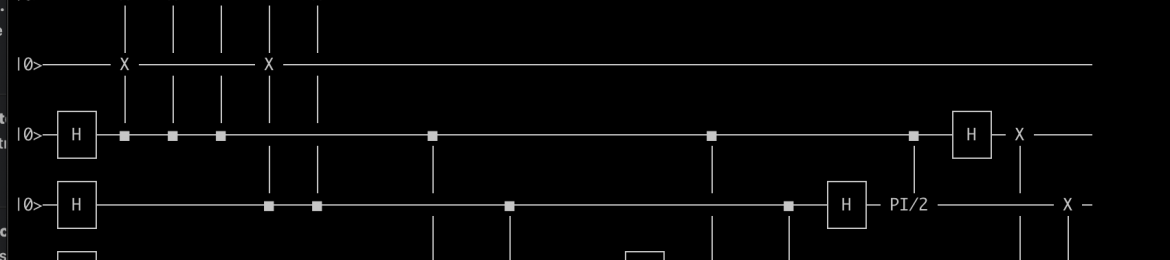

Post-Quantum Cryptography: To counter the threat posed by Shor's algorithm, researchers are developing post-quantum cryptographic algorithms that are resistant to quantum attacks. These algorithms use mathematical problems that are believed to be hard for both classical and quantum computers to solve. Quantum-Secure Blockchains: Some blockchain projects are exploring quantum-secure solutions, such as lattice-based cryptography, to ensure the long-term security of their networks. These solutions aim to provide the same level of security and efficiency as current cryptographic methods but with resistance to quantum attacks.

Post-Quantum Cryptography: To counter the threat posed by Shor's algorithm, researchers are developing post-quantum cryptographic algorithms that are resistant to quantum attacks. These algorithms use mathematical problems that are believed to be hard for both classical and quantum computers to solve. Quantum-Secure Blockchains: Some blockchain projects are exploring quantum-secure solutions, such as lattice-based cryptography, to ensure the long-term security of their networks. These solutions aim to provide the same level of security and efficiency as current cryptographic methods but with resistance to quantum attacks.
Digital Signatures: Most cryptocurrencies, including Bitcoin and Ethereum, rely on digital signatures for transaction verification. These signatures are typically based on elliptic curve cryptography (ECC) or RSA, both of which are vulnerable to Shor's algorithm2. A quantum computer running Shor's algorithm could break these digital signatures, potentially allowing an attacker to forge transactions and steal funds.